November 23, 2026
Filtration Essential To Optimizing Gas Turbine Performance
When it comes to designing a gas turbine combustion air inlet filtration solution for an oil and gas industry application, there are many aspects of the site and local environment that maintenance engineers need to consider along with the process demands of the facility’s onsite power generation or compressor mechanical drive plant.
Optimizing a gas turbine filtration solution requires a thorough understanding of technology, environment and end user operational priorities. Although the gas turbine filter system and the replaceable filtration elements are sometimes thought of as commodity items, the influence they have on overall system performance and plant profitability is significant. Different applications require different gas turbine filter system attributes. There is rarely a one-size-fits-all option.
In this blog, we will cover important factors to consider when designing a gas turbine air inlet filtration system, including:
Condition monitoring for contamination
Optimizing filter performance
Site safety and housing design considerations
Condition monitoring for contamination
Extending gas turbine offline maintenance intervals is typically a high priority, especially if the unit is operating as baseload in a remote location with limited on site maintenance capability or if the gas turbine is mechanically coupled to a driven compressor, and the compressor performance is key to plant operations. Take Liquefied Natural Gas (LNG) processing, for example; if the gas turbine drivers for the refrigerant compressors used to help process the natural gas go down, the entire plant could go down at a cost of millions of dollars per day in lost production!
Monitoring gas turbine performance is key to avoiding unexpected and sudden pressure spikes due to filter blockages. Filter selection needs to be reviewed in terms of the risk/cost of reduced plant production efficiency created by contaminants bypassing the filters and moving downstream into the gas turbine, an equation highly dependent on the duty cycle and reliability needs of the processes.
It is important to note that higher filtration performance typically means a higher associated initial differential pressure (DP), as well as higher initial investment costs. One job of the rotating equipment engineer is to align these commonly conflicting requirements with a strategy for spare parts planning within the pre-defined gas turbine maintenance and inspection windows (BSI, HGP, major inspection). These inspection windows are normally defined by the gas turbine OEM based on fired hours and/or the number of starts.
Optimizing filter performance
Where sub-micron-sized dust levels are high and identifiable, consider installing high-efficiency (EPA or HEPA) filters as the final stage of filtration. These filters capture the smallest particles and minimize fouling of the compressor blades. However, if moisture remains in the airflow by the time it reaches the EPA stage, then the filtration media must be carefully evaluated. To help avoid sudden and unplanned turbine outages, the best option is to use materials and media not prone to pressure spikes and that do not require frequent monitoring.
Moisture (especially when combined with hydrocarbon mists) is one contaminant that will make airborne dust or corrosive salts sticky and much more likely to leach through a filter and travel downstream into the clean air path. One way to mitigate this is to use hydrophobic (water/liquid resistant) filtration media. There are two primary technologies on the market – ePTFE lamination and Microfibre glass treated with fluorocarbon. ePTFE-laminated media uses a thin layer of expanded PTFE (polytetrafluoroethylene) on the surface of a base substrate media, which provides the hydrophobic characteristics.
When applying this technology to gas turbine air filters, however, some issues have occurred, such as the ePTFE hockey stick effect, where moisture/fog droplet blockages cause sudden and unpredictable pressure spikes. Microfiber glass media is the key technology in high-efficiency hydrophobic filter elements. Microglass is around 10 times thicker than ePTFE and offers more pathways for the air to flow while still capturing solid and liquid phase particulates, oils and salts.
In terms of liquid contaminants requiring hydrophobic filters, salt serves as a dangerous one for gas turbines. Installations within ~12 miles (20 km) of the coast are susceptible to tiny particles of sea salt. The waves and wind carry salt in aerosol form, which the gas turbine ingests. Salt is hygroscopic, meaning it moves easily from solid to liquid form in the presence of moisture and humidity. It is very common to see a gas turbine filter capture salt in its dry state; only then for this particle to swell and become liquid when the ambient humidity increases. The liquid salt/brine droplet can then leach through non-hydrophobic media and reach the gas turbine, eroding the internals. To ensure that a filter system offers adequate protection, laboratory and field validation needs to allow, define and test for the expected salt concentrations, the salt aerosol droplet size distributions and changes in the salt’s state (solid to liquid).
Site safety and filter house considerations
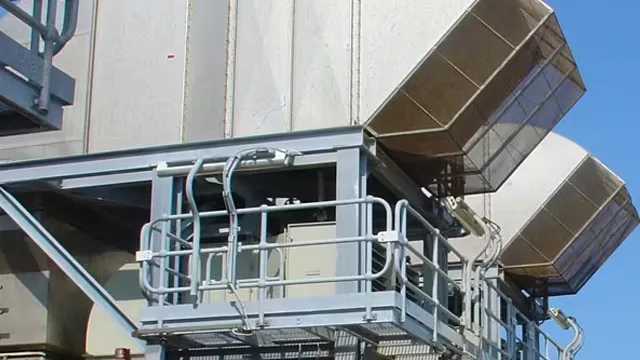
Depending on the environment, available space and gas turbine application, inlet house design might also include weather hoods to protect against rain and snow, as well as inertial moisture/ mist eliminators and moisture coalescers (agglomerators). All of these, as well as lower-efficiency rated prefilters, are commonly applied upstream of any high-efficiency filter to extend and control changeout intervals and filter lifetimes.
If a gas turbine installation resides in a cold region with humidity above 50%, ice crystals become a concern. Heating systems within the filter house are designed to prevent ice crystals from blocking the filters.
If temperatures are high, air cooling/ power augmentation systems can be incorporated (ideally downstream of the filter elements) to minimize the effects of reduced power output from the gas turbine.
The noise created by the gas turbine also should be considered for the safety of site personnel and any nearby communities. Noise reduction/attenuation technology must be applied. Personnel must also be able to enter the gas turbine enclosure, and the equipment within the enclosure must be kept cool. To achieve this, suitable enclosure ventilation (intake and exhaust) becomes necessary.
Other considerations for inlet house design include handling emissions and temperature fluctuations of the GT exhaust system using bleed air and designing the intake ductwork within the allowable aerodynamic and thermodynamic airflow performance windows, typically referred to as the inlet air distortion limits. If you are protecting your gas turbine from a salty, corrosive environment, then the inlet house also needs to be resistant to this harsh atmosphere. The overall filter house design needs to be robust, with its materials able to withstand all environmental conditions possible on-site. Leaks are another concern. Features such as seamless gaskets on cartridge filters as well as ensuring the proper pleat spacing and potting glue have been used help prevent leaks during operation.
Conclusion
The design of a gas turbine inlet house is about more than just one aspect. Each installation has unique requirements. A holistic approach is needed, one that understands the necessary equipment to optimize performance while also considering real-world aspects. Protecting the gas turbine from contaminants usually requires multiple filtration stages. If one part is not suitable, the rest of the system can suffer and result in a gas turbine shutdown.
Consider partnering with an experienced, full-service provider, such as Parker Hannifin, that will deliver innovative, custom gas turbine inlet filtration solutions designed to meet your specific operating goals.
Filters and air intake systems are vital for the protection of gas turbine machinery. If they are not correctly optimized for the site conditions, the impact on process availability and maintenance overheads will be significant. Although the filter itself might be considered a lower-cost commodity item, the question that should be asked is: “What is the value of the overall filtration system design to ongoing operations?”